Source Electric Liquid Filling and Capping Machine for Food, Chemical, and Cosmetics
Explore 30 Electric Liquid Filling and Capping Machine options designed for food, chemical, and cosmetic production lines. Buyers can compare specifications, pricing, and customization features to find the right equipment for their facility.
Key considerations
Products List


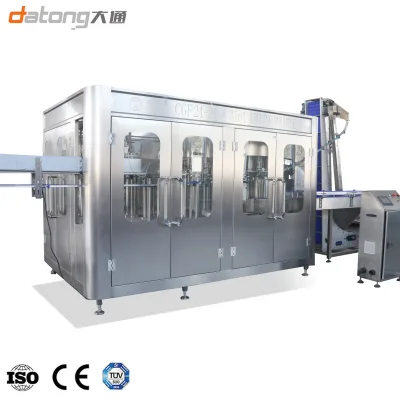
Fully Automatic Liquid Filling and Capping Machine, Suitable for a Variety of Bottle Water
$1000.00 - $4200.00
MOQ: 1 Pieces


3 in 1 Liquid Filling Machine Liquid Filling Sealing and Capping Machine
$17500.00 - $18000.00
MOQ: 1 Sets

Automatic Liquid Filling and Capping Machine for Single Head Efficiency
$5970.00 - $8955.00
MOQ: 1 sets


Bottle Filling Machine E-Liquid Filling Capping Machine Automatic Liquid Filling Line
$23485.00 - $26459.00
MOQ: 1 Pieces


$13500.00 - $23000.00
MOQ: 1 Pieces


Comprehensive Sourcing Guide
Strategic Sourcing Guide for Electric Liquid Filling and Capping Machines
Selecting the correct Electric Liquid Filling and Capping Machine requires a rigorous analysis of technical compatibility, operational efficiency, and supplier reliability. The market for these automated systems is vast, ranging from simple volumetric fillers to complex linear production lines capable of handling diverse viscosities. Buyers must navigate a landscape where specifications vary significantly between models, often within the same product category. This guide provides a structured approach to evaluating electric liquid filling solutions, focusing on the specific attributes observed in current market listings while adhering to strict evidence-based procurement principles.
Technical Architecture and Filling Principles
The core functionality of any liquid filling machine is defined by its filling principle and dosing device. In the current market, two primary filling mechanisms dominate the electric liquid filling segment: negative pressure and pressure-based systems. Negative pressure filling is often utilized for delicate liquids where foam generation must be minimized, ensuring a gentle fill that preserves product integrity. Conversely, pressure filling systems rely on positive air pressure to push the liquid into the container, a method frequently employed for high-viscosity products or applications requiring rapid throughput.
The choice of dosing device is equally critical and directly impacts filling accuracy. Listings indicate the availability of plunger, capacity cup, and rotor-based dosing devices. Plunger systems are typically associated with piston filling machines, offering robust performance for a wide range of liquid viscosities. Capacity cup dosing is often selected for applications where precise volume measurement is achieved through mechanical displacement, while rotor dosing devices are integral to rotary machine structures, facilitating continuous high-speed operations.
Machine structure further dictates the workflow. Linear structures, often described as straight-line machines, are ideal for facilities with limited floor space or those requiring a modular approach to production. These machines typically feature multi-head filling valves to increase output without expanding the footprint. In contrast, rotary structures utilize a rotating carousel to move containers through various stations, offering higher speeds for large-scale production environments. The driven type for these systems is predominantly electric, ensuring consistent power delivery and integration with modern control systems.
Material Compatibility and Construction Standards
The physical construction of the machine must align with the chemical and physical properties of the product being processed. The primary material of construction is a decisive factor in determining the machine's suitability for specific industries. Stainless steel grades 304 and 316 are the industry standards for food, beverage, and chemical applications. Grade 304 offers excellent corrosion resistance for general food processing, while Grade 316 provides superior resistance to chlorides and harsh chemicals, making it essential for pharmaceutical or aggressive chemical environments.
Buyers must verify that the machine's contact parts are constructed from these stainless steel grades. While some listings mention composite materials for packaging or specific non-contact components, the integrity of the fluid path is paramount. The machine's ability to handle both liquid and paste applications suggests a versatile design, but the specific viscosity range must be confirmed with the supplier. The voltage requirements observed in the market are typically 220V, with frequency variations of 50-60Hz, necessitating careful electrical compatibility checks with the buyer's facility infrastructure.
Operational Specifications and Performance Metrics
Understanding the operational parameters is essential for calculating return on investment and ensuring production targets are met. Key performance indicators include filling accuracy, air pressure requirements, and power consumption. High-accuracy filling machines typically achieve tolerances of ±1% for liquid applications, a standard that ensures product consistency and minimizes waste. Deviations from this standard can lead to significant financial losses in high-volume production runs.
Air pressure requirements are another critical specification. Systems often operate within a range of 0.4 to 0.6 MPa, requiring a stable compressed air supply from the facility. The power consumption, observed in some models as low as 90W for specific components, indicates energy-efficient designs, though the total power draw of the entire line will vary based on the number of heads and the complexity of the automation. The operating type is generally cycle-based, meaning the machine completes a full sequence of fill, cap, and discharge before initiating the next cycle.
The feeding cylinder structure also plays a role in efficiency. Multi-room feeding structures allow for continuous processing, reducing downtime between batches, whereas single-room feeding structures may be more suitable for smaller, intermittent production runs. The packaging container lifting structure, whether pneumatic lifting or a chute pneumatic combination, ensures smooth handling of bottles and containers, preventing damage during the transfer process.
Application Scenarios and Industry Suitability
Electric liquid filling machines are designed to serve a broad spectrum of industries, with the most common applications found in food and beverage factories and chemical plants. The versatility of these machines allows them to handle a wide array of products, from thin beverages to thick pastes. The applicable scene is often listed as "all," suggesting a high degree of adaptability, but buyers must validate this claim against their specific product characteristics.
For the food and beverage sector, hygiene and ease of cleaning are paramount. Machines with stainless steel construction and smooth surfaces facilitate compliance with food safety regulations. In the chemical industry, resistance to corrosion and the ability to handle hazardous materials are the primary concerns. The customization options available in the market allow suppliers to tailor machines to specific container shapes and sizes, ensuring a perfect fit for unique packaging requirements.
Cost Drivers and Procurement Economics
The price of an Electric Liquid Filling and Capping Machine is influenced by several factors, including the complexity of the filling principle, the number of heads, the material grade, and the level of automation. Market observations indicate a wide price range, from approximately $1,000 to $280,000. This variance reflects the difference between basic manual or semi-automatic units and fully automated production lines equipped with advanced PLC control systems.
The minimum order quantity (MOQ) is a significant consideration for buyers. In the current market, many suppliers offer an MOQ of 1, allowing for single-unit purchases which is ideal for pilot testing or small-scale operations. However, buyers should be aware that bulk orders may yield different pricing structures or lead times. The packaging of the machine itself, whether in a plywood case, carton, or wooden box, also impacts shipping costs and must be factored into the total cost of ownership.
Supplier Evaluation and Quality Assurance
Evaluating a supplier requires a deep dive into their technical capabilities and quality assurance processes. The origin of the machine, often listed as China or specific cities like Guangzhou and Zhangjiagang, provides context regarding manufacturing hubs but does not guarantee quality. Buyers must verify the condition of the machine, ensuring it is new and not refurbished, and check for the presence of core components such as PLCs, engines, and motors from reputable manufacturers.
Quality control should extend beyond the initial purchase. Buyers should request documentation regarding the machine's standard compliance, such as the specific stainless steel grades used. The packaging standard, whether a plywood case or wooden packaging, should be sufficient to protect the machine during international transit. Additionally, the lead time and delivery terms must be clearly defined to avoid production delays.
Long-Term Procurement and Maintenance Considerations
The longevity of an electric liquid filling machine depends on proper maintenance and the availability of spare parts. Buyers should inquire about the warranty period and the supplier's support network for technical assistance. The high-accuracy and highly automatic features of these machines require regular calibration and cleaning to maintain performance. The low consumption and high efficiency advantages are only realized if the machine is operated within its specified parameters.
Furthermore, the customization availability should be leveraged to future-proof the investment. As production needs evolve, the ability to upgrade or modify the machine can extend its useful life. Buyers should also consider the energy efficiency of the machine, as high-efficiency models will reduce operational costs over time. By focusing on these long-term factors, buyers can ensure a sustainable and profitable investment in their production infrastructure.
Comparative Analysis of Machine Configurations
To assist in decision-making, the following table summarizes the key differences between common machine configurations observed in the market. This comparison highlights the trade-offs between speed, accuracy, and application suitability.
| Feature | Linear Structure | Rotary Structure |
|---|---|---|
| Typical Application | Food & Beverage, Chemical | High-volume Production |
| Filling Principle | Negative Pressure, Pressure | Pressure, Volumetric |
| Dosing Device | Plunger, Capacity Cup | Rotor |
| Feed Cylinder | Multi-Room Feeding | Single-Room Feeding |
| Structure Type | Straight Line | Rotary Carousel |
| Best For | Flexible, Multi-product lines | Continuous, High-speed lines |
This table illustrates that while linear machines offer flexibility and are suitable for varied production runs, rotary machines are optimized for continuous, high-speed operations. The choice between these configurations should be driven by the specific volume requirements and the diversity of products being processed.
Final Procurement Recommendations
In conclusion, sourcing an Electric Liquid Filling and Capping Machine requires a meticulous approach that balances technical specifications with economic realities. Buyers must prioritize the compatibility of the filling principle and dosing device with their specific product, ensuring that the machine can handle the required viscosity and volume with the necessary accuracy. The material construction, particularly the use of stainless steel grades 304 or 316, is non-negotiable for maintaining product safety and machine longevity.
By carefully evaluating the supplier's capabilities, verifying the quality of core components, and understanding the total cost of ownership, buyers can make informed decisions that align with their production goals. The wide range of available options, from basic units to complex automated lines, offers the flexibility to find a solution that meets both current needs and future growth aspirations. Ultimately, the success of the procurement lies in the thoroughness of the due diligence process and the alignment of the machine's capabilities with the buyer's operational requirements.
FAQs
What filling principles are available for electric liquid filling machines?
Electric liquid filling machines utilize negative pressure or pressure-based filling principles. Negative pressure systems minimize foam for delicate liquids, while pressure systems push liquid into containers for high-viscosity products or rapid throughput.
Which dosing devices are commonly used in these filling machines?
Common dosing devices include plunger, capacity cup, and rotor types. Plunger systems suit piston machines for various viscosities, capacity cups measure volume mechanically, and rotor devices enable continuous high-speed operations in rotary structures.
Can these machines handle both liquid and paste applications?
Yes, these machines are designed to handle both liquid and paste applications. Their versatile design allows processing of thin beverages to thick pastes, provided the specific viscosity range is confirmed with the supplier for optimal performance.
What stainless steel grades are used for machine construction?
Machines are typically constructed from 304 or 316 stainless steel grades. Grade 304 offers corrosion resistance for general food processing, while Grade 316 provides superior resistance to chlorides and harsh chemicals for pharmaceutical or aggressive chemical environments.
How accurate is the filling process for liquid applications?
High-accuracy filling machines typically achieve tolerances of ±1% for liquid applications. This standard ensures product consistency and minimizes waste, which is critical for maintaining quality in high-volume production runs across food and beverage industries.
What is the typical voltage requirement for these machines?
The typical voltage requirement is 220V with a frequency of 50-60Hz. Buyers must verify electrical compatibility with their facility infrastructure to ensure safe and consistent operation of the Electric Liquid Filling and Capping Machine systems.
Are customization options available for specific packaging needs?
Customization options are available to tailor machines to specific container shapes and sizes. This flexibility allows suppliers to adapt the equipment for unique packaging requirements, ensuring a perfect fit for diverse production lines and product types.